Performancing Metrics

Thoughts of a Piece of Dust: environment
Showing posts with label environment. Show all posts

Sunday, April 22, 2012

Earth Day 2012

So it's Earth Day again.  Today is a day when it's probably a good idea to reflect on the fact that we only have one earth (unless this is true) and no place to go if we mess up the place. I hate to admit it, but my ethusiasm for encouraging people to change their ways has died down a bit in recent years.  It's been difficult to get into good habits when you're constantly moving around.  Many times I've had to sacrifice good choices with cheaper and easier ones.  However, maybe today is a good day to get back on track.

Way back (5 years ago, I think) I did do a post about Earth Day.  I'm not going to link to it because there wasn't much.  However, I did find another post I made describing 50 things you could do (I probably lifted that from somewhere) and there were some comments adding to it.  I thought I'd go through and describe which ones I've done in the past few years (and which ones I could have done but failed - i.e. the ones I should be focusing on).

A small caveat before I begin: I read the book No Impact Man a while back and, while it was encouraging to see what changes could be made, it was no way a realistic way of living in today's society.  The author, Colin Beavan, did some incredible things, but made it clear that the way our society is set up makes it impossible to actually have no impact.  So I guess the biggest thing you could do is vote for people who will put us in the right direction (good job Canada, on giving Steve-o that majority... note: that was sarcasm) so that it is possible for more people to make better choices.

Another caveat: I really don't like it when people (usually children) say "We need to save the environment."  Huh? That just shows that the person doesn't quite understand the issue. If you said: "we need to preserve the environment" you'd be a bit closer, but still off.  We are part of the environment and that environment is changing all the time.  The problem is that we are causing massive amounts of change to a very complex system.  Every small change affects the whole and if we make too many changes, our ability to survive in our surroundings will suffer greatly.  Anyway.... I digress.

Things I've done in recent months (from my previous list and comments):
  1. Compost Food Scraps (Though sadly, not in NZ, all in the UK, Canada and Korea.  I was most saddened in Tanzania where they burned them instead).
  2. Turning off lights when I'm not using them (they're off now).
  3. Taking the bus, walking and running (every day).
  4. Turning off the tap when I brush my teeth (this one should be automatic for most people).
  5.  Don't have a shower unless you need to (yeah, might be gross, but some days I don't need one).
  6. Use biodegradable soaps, especially laundry soap (this one is much easier these days, most stores sell them, and they're not too expensive).
  7. Recycle (another one that should be automatic by now, though it isn't always).
  8. Unplug appliances when not in use (this is a big one and most people waste a lot of electricity by keeping tvs plugged in).
  9. Put on warm clothes instead of using the heat (um... in England they don't really use the heat that much, so I guess this counts).
  10. Open the window instead of using A/C (no A/C in England, haven't seen it here yet).
  11. Grow your own food (I ate fejoas off of a tree the other day, does that count? The house I lived in in the UK did grow some food, but I was never there in the summer to eat it).
  12. Don't drink bottled water (who does this anymore? You should be shaken until some sense comes into you - unless of course you live in Seoul or Africa, but then you should buy bigger and refillable containers of water, which are cheaper anyway.  And, when I was in Tanzania, the family I was staying with reused the big bottles I had afterwards so they weren't a complete waste).
  13.  Don't use paper unless you need to (my grocery lists are on the back of old reciepts, and other similar things).
  14. Reuse plastic containers instead of buying new ones (in England I had so many old yogurt and hummous containers full of seeds and nuts and other things).
  15. Don't put fruit/veggies into plastic bags.
  16. Use cloth bags when grocery shopping (failing marks for both the UK and NZ on this.  Plastic bags galore with no incentive to not use them.  I can understand the UK, but a bit shocked here).
  17. Use energy efficient light bulbs (I haven't bought many recently, but when I do, I buy those... can you buy others these days?)
  18. Submit assignments (job applications) electronically (yes, but some schools are demanding paper copies only, and I suspect the ones I send in electronically get printed out anyway).
  19. Use the library (when living in Seoul this was difficult, though I did buy a lot of second hand books, but in the UK and NZ a library card was one of the first things I got).
  20. Wash clothes with cold water (and it's probably better for the colours anyway).
  21. Air dry clothes instead of using a dryer (haven't had a dryer in a while so that hasn't been a problem, though with the humidity here, it may become necessary).
  22. Use cloth napkins instead of paper (and I save the extra one sthey give me from restaurants).
  23. Read newspapers online (cheaper too!).
  24. Buy local produce and from local shops/farmers markets (getting into that here, and it is cheaper).
  25. Donate old clothing instead of throwing it out (when I left the UK I dropped off a lot of stuff in a Traid bin, after a very well timed school assembly in my final weeks in London).
Wow, I'm actually impressed I can list all of those things.  I guess they've all just become second nature to me by now.  But instead of me boasting about what I have been doing, perhaps I should focus more on what else I could be doing.  So here is a (shorter) list of what I'm going to work on:
  1. Find a way to compost food.  The last few cities I've lived in have all had food waste collection. I guess it's not a priority here, but maybe I can find a way to do something.
  2. Have shorter showers.  I think the lack of heating in England made it hard in the winter time when I was cold (also, less hot showers).  I should revert back to the bucket showers I had in Tanzania.  Very little water use and you could even heat it up.  We'll see though.
  3. Plant a tree.  Hmmm.  Sounds like a good idea.  I'll have to look into it though.
  4.  Fly less.  Ok, going from London to Auckland isn't exactly the best way to not add CO2 to the atmosphere.  To be fair, when I travelled around Europe, I took the train (fun times) instead of flying to Brussels, Prague and Copenhagen.  In fact, I really love the train.  But still, my miles in the air have probably been astronomical since my post 5 years ago.
  5. Vote for Leaders who will do something.  Now here I have to hang my head in shame.  During the last election (Canadian) I registered to vote from overseas and got my voting card in the mail.  Even though I filled it out immediately and when to the post office as soon as I could (I just missed the closing time one day and had to go back the next) I was told that for a large sum of money (it was over 50 pounds) I could send it and it MIGHT get there the day after the election.  My vote was for the Green Party member in my riding.  So I bet you think it wouldn't have made a difference without that vote.  Well, it didn't.  She still won.  Sad that I couldn't be a part of history, but I won't let that happen next time. Sigh.
I could add a few more but I'll leave it at that.  What will you do for Earth Day?  I guess this will show who actually reads my blog and who actually read to the end of this post!  Haha!  Please tell me one thing (or more if you'd like) that you're going to try to change today.  Something small (or big, but it doesn't have to be).  Every little action (or inaction, I guess) helps.

I look forward to seing what you say.

Monday, February 18, 2008

Wake Up Please...

About 10 months ago, a roommate of mine sent me an article and I finally got around to reading it. The article, title "A Terrifying Truth" and written by Dave Lindorff, discusses the current situation that we are dealing with on this planet. Though the content is not anything that is new to me, it may be new to anyone out there reading my blog and I thought it was worth sharing as Lindorff writes much clearer than I do.

Read the Article Here

I should note that while he may come across as a crackpot in some of the things he says, we are quickly approaching a point where we will have no choice and some of these things that we deem so important to our lives (such as that thing called the economy which is apparently more important that anything else) will collapse on their own and we'll be faced with even larger problems.

As Lindorff writes,

[i]nstead of thinking of ourselves as consumers and competitive free agents, we need to start thinking of ourselves as passengers on a boat that is sinking. If we all run for the lifeboats and life preservers and fight to see who can be saved, the life vests will be torn and ruined and the lifeboats will fall into the sea and sink. In the end, we’ll all go down. If, on the other hand, we change tack, recognize that we’re all in this together, and make orderly plans to save ourselves collectively, we may all be able to get away.
Lately it has been very troublesome for me to listen to people spout off how An Inconvenient Truth has opened their eyes and then watch them do all sorts of things that contribute to the problems Mr. Gore was describing. Often they will justify it somehow. The economy has always been a reason not to change our way of life. But the logic behind inaction and half measures may turn out to be human kinds biggest blunder. For starters, the economy is worthless without the life systems that support it. A 1997 study (which has been mentioned over and over recently) found that the earth's ecosystem did approximately $33 trillion worth of work (including but not limited to purifying water, providing energy to grow plants, and pollination). At that time, the global GNP was $18 trillion - just more than half of what the ecosystem provided. Without this ecosystem, we would have a much harder time sustaining our economy.

A second argument against the economy excuse is very simple and straightforward. If we destroy our ecosystem we are potentially destroying our ability to live in it. What use is money to a species which does not exist? Many people do not believe this is possible. To them, the problems are with the polar bears and the frogs. How can that possibly affect us? And even if it does we have technology. Right? Though I am no expert, I do not believe that a mass migration to Mars or beyond will be possible in a way that maintains any semblance of our way of life.

Some may also point to the market to solve our problems. In theory, the market could solve a lot of these problems (with proper government control). But we don't have a free market. What we have are large monopolies that spend most of their profits convincing us that we need things we don't need so that their profits remain high. My question is: why is money so important that we have to work ourselves so hard? Sure, money pays for food, clothing and shelter, but do we really need those other things? Are we better off spending our time on more fulfilling things (like spending time with family and friends)?

The article hits one point on the nose as well: we are only taking half measures to try to solve these problems. As if a switch to cloth bags will somehow take carbon dioxide from the air. We do these little things to assuage ourselves of the guilt we have when we fill up our gas tanks.

Lindorff is right, we need to rethink our society. A band-aid solution won't save you when air pollution is lethal (which some would argue it already is in many parts of the world).

The bottom line is that we've all contributed to the problems humanity is now facing. But we are all part of the solution. We have let consumerism get the better of us for some time now. We have become disconnected with the world and the people around us. With creative and inspired leadership (and there is some hope for this) we may find a way. We need to stop thinking about what is best for "me" and start thinking about what is best for "us."

The old adage goes: "There's no I in team," and right about now, our species needs to take that advice to heart, or like Lindorff says, we could rip apart the life jackets.

Saturday, January 05, 2008

Consume this...

I read this editorial in NY Times online edition a day or two ago and thought it would be a good thing to share. In a break from my usual tradition, I'm not going to make any comments on what is written beyond the fact that I think that what is written about is something we all need to contemplate (and more importantly act on).

Enjoy!

p.s. if you find yourself nodding in agreement the whole time and wanting more of the author's (Jared Diamond) perspective you can try reading his books: The Third Chimpanzee, Collapse, and Guns, Germs and Steel. I have read two of the and am planning on reading the third in the near future. Or if you're really lazy, National Geographic made a video series for Guns, Germs and Steel.

Thursday, June 14, 2007

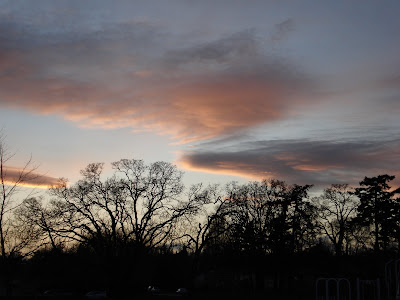
Photo Feature: Hamilton Sunset


Sunset over Hamilton Harbour. Taken by Sharon Davidson.

If you have any pictures you think are good send them to pieceofdust@gmail.com and I will post them.

Thursday, May 24, 2007

Photo Feature: Cherry Blossoms

One of the first Cherry Blossoms in Victoria, B.C. this spring - sometime in March (taken by Michael Davidson)

If you have any pictures you would like to submit, please email them to pieceofdust@gmail.com

Thursday, May 17, 2007

The Earth is Running Out of Earth!

You may have noticed that during the last two days my posting has slowed down a bit. I've been very busy, but most of that is over now so I'm going to try and make a good post here.

I read an article in the Globe and Mail Focus section this weekend that I thought was rather interesting. The article was called "Planet Earth has a dirty little secret" (unfortunately it is not available for free on the Globe website, but you can purchase it if you like).

The main idea of the article is that we are destroying or degrading the usable soil faster than it can regenerate. We are doing this by building on top of the soil, by poisoning the soil and by growing crops too often in the soil. The author, John Allemang, and the scientist he talks to, David R. Montgomery, say that even if we can solve all of the other environmental problems, we will eventually run out of soil and be unable to grow the food we need. Problems with dirt can easily cause famines which have, in the past, killed many people (100 000 people in West Africa in 1973). Dr. Montgomery suggests that we have between 200 and 2000 years until we get into real troubles. It is estimated that we lose 1% of our usable land worldwide each year.

I don't want to paraphrase the article completely, but I will give some points that I thought were important:

  • since World War II approximately 40% of global cropland has degraded.
  • our ancestors were much fewer in number and would often farm an area dry and move on to the next. We do not have that luxury any more.
  • people are more likely to get behind issues related to water than issues related to dirt.
Dr. Montgomery has a book that covers this topic (sorry, the link is Amazon. Keep in mind there are MUCH better places to buy books from!).

I guess this post could come off as another warning to the masses to go along with global warming (climate change), pollution, etc. I think this is just another sign that we need to rethink the way we live. All of our environmental "issues" these days stem from the same attitude many of us have with regards to the planet. That is the real issue. This latest idea is but one symptom of a bigger problem. I'm at a loss myself, but obviously if this is right, we do need to start making some changes...

Thursday, May 10, 2007

Reducing the Impact of Plastic Bags

Ever since I wrote my list of things you can do to help the environment, I've wanted to follow it up with some in depth looks at a few of the ideas. Until now I have been a bit busy to do so, but an article I saw on Yahoo! News today prompted me to get writing.

As you may have guessed from the title, I'm going to talk about plastic bags - the ones you get whenever you go buy something at a store.

So what's the problem with plastic bags? Well, they're made from plastic for starters. Why is that bad? Plastics come from oil, and oil extraction creates many problems for the environment and for the people who happen to live in oil-rich countries. Oil is a non-renewable resource so using plastic bags reduces our oil supply. Plastic bags also take a long time to decompose. There are a few other hazards related to plastic bags, but the above two are the main reasons.

There are at least three options to help solve (or reduce) the problem:

1) Banning plastic bags: San Fransisco became the first city in North America to ban the bags and bans have followed in several cities, including Leaf Rapids, Manitoba. Other cities, like Tofino in BC have looked into a plastic bag tax. As seen in the above article, Ontario is making strides to reduce the number of plastic bags used in the province.

2) Personal choices: You can (or a business can) decide not to use plastic bags. I have not used a plastic bag in months and I have even been reusing my plastic bags for bulk things. A simple solution is to bring a cloth bag (or old plastic bags) to the grocery store and just tell the clerk you have your own bag (they like that because they usually don't have to bag the items!). Many stores, like Mountain Equipment Co-Op, Peppers Foods (in Victoria, B.C.) and Sainsbury's (a grocery store in the UK) have started using biodegradable bags (seel more on that below). Another approach stores can make is to start charging for plastic bags or to take money off of purchases if patrons use their own bags. These are all effective ways of encouraging environmentally friendly choices.

3) Biodegradable bags: As mentioned above, some stores have made the switch to biodegradable bags (that can just be thrown into the compost). For more information on these, check out Bio Bag. There site contains some good information on the bags the company makes.

So as you can see there are already many choices to dealing with plastic bags. Do what you can. Perhaps where you live, you can save money by not using plastic bags. Give it a try. You'll be doing a small part to help the environment. If enough people make the switch it makes a big difference!

Thursday, May 03, 2007

Clearing Up The Climate Debate Smog

I wanted to highlight another blog today. There is actually a funny story behind this blog and how I discovered it. I was in the grocery store a month or two ago and saw someone wearing a jacket with this web address on the back of it. It's name caught my attention so I decided to check it out. You can follow my discovery by checking out DeSmogBlog.com.

It actually took me a while to figure out what side of the climate change debate this blog was on. It was not long, however, until I found this explanation on the site:

DeSmogBlog exists to clear the PR pollution that is clouding the science on climate change.

An overwhelming majority of the world’s climate scientists agree that the globe is warming - the world's climate is changing - and that the indiscriminate burning of fossil fuels is to blame. We know that the risks are incalculable and, increasingly, we understand that the solutions are affordable.

Unfortunately, a well-funded and highly organized public relations campaign is poisoning the climate change debate. Using tricks and stunts that unsavory PR firms invented for the tobacco lobby, energy-industry contrarians are trying to confuse the public, to forestall individual and political actions that might cut into exorbitant coal, oil and gas industry profits. DeSmogBlog is here to cry foul - to shine the light on techniques and tactics that reflect badly on the PR industry and are, ultimately, bad for the planet.

So basically, they are here to counter the points of the scientists who refute global warming. I have checked this blog out occasionally over the past few weeks and months and have found some interesting things in it.

Check it out if you're interested...


Photo Feature: The Sun Through A Tree


The sun shining through a tree on a street in Victoria, BC (taken by Michael Davidson)


If you have any pictures you would like to submit, please email them to pieceofdust@gmail.com

Thursday, April 26, 2007

Canada to Ban Inefficient Lightbulbs

I was going to post about other environmental issues (and I still might make one more post), but this story popped up today in the news.

Basically the federal government has announced that it plans to ban the sale of inefficient light bulbs by 2012. Check out the articles from CBC and the Globe and Mail.

For more information on the more efficient bulbs, read here.

I find it interesting that there is criticism of this initiative. Not only do these bulbs help the environment, but they save money for citizens. Everyone wins. The criticism seems to revolve around the fact that the government is not doing enough. Though I do not have all the facts at this moment, I would tend to believe that. However, I think those groups that are complaining ought to at least applaud the government for the steps they are taking.

One of the articles claims that lighbulbs account for only 1.5% of our carbon emissions, and that this won't make a huge impact. But surely it will make an impact. There is not one single fix to this problem, but this is definitely a step in the right direction.

Though not criticism of this initiative I have some thoughts about these new light bulbs that may not be shared with many. Maybe there have been studies done to answer my questions, but I wonder how much of that wasted energy in inefficient bulbs reduces the strain of heating in the winter. Will this effect cancel out with the savings in cooling in the summer? These are just things to think about.

All in all I find this move rather interesting. Though a small step, it appears our country is moving at least in the right direction

Photo Feature: Flowers

Flowers outside of Nellie McClung Library in Victoria, BC (taken by Michael Davidson)

If you have any pictures you would like to submit, please email them to pieceofdust@gmail.com - for example if you have any pictures of a volcano....

Monday, April 23, 2007

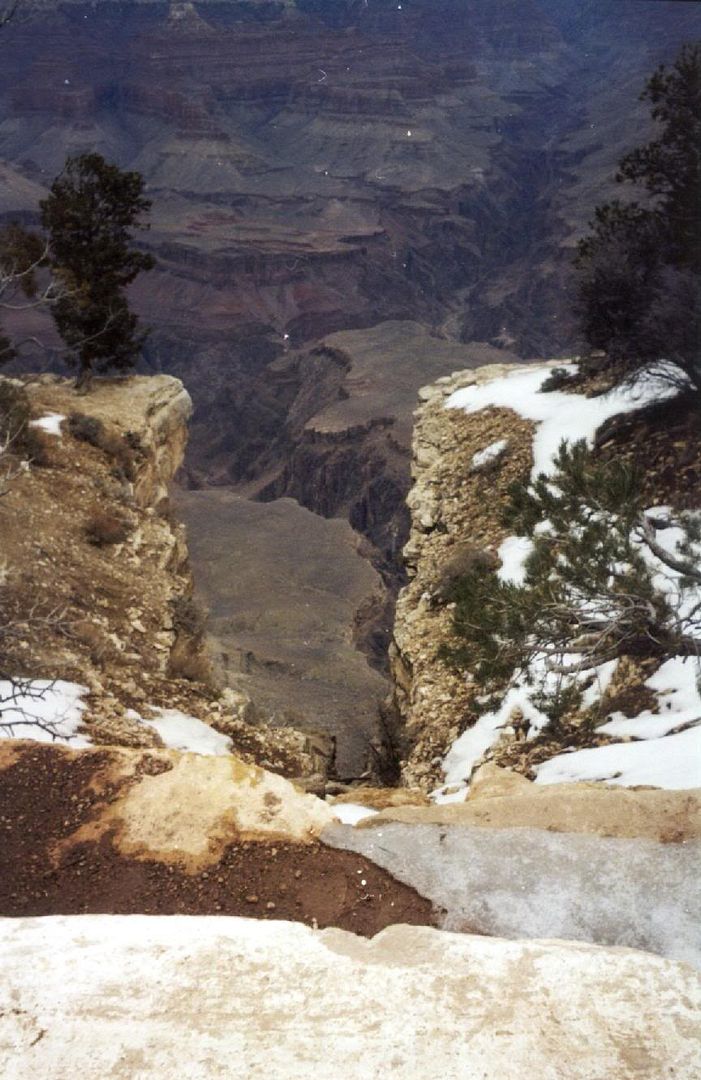
Photo Feature: Grand Canyon


This picture of the Grand Canyon was submitted by Heather Davidson.

If you have any pictures you would like to submit, please email them to pieceofdust@gmail.com

Today is Earth Day!

I thought I would mention that today is Earth Day. If you want to, today would be a good day to change something about the way you live. Check out the list I gave to you (and that YOU added to) for ideas.


Yesterday, while waiting for the bus, I saw a garbage can that was overflowing with garbage. I did not have my camera to take a picture, but I will describe it for you. I saw the following: a plastic bottle, newspaper, a timbits box, a banana peel, and many more things. What saddened me (and annoyed me) was that many of the things in the garbage did not need to be there. The banana peel could have been composted (or simply thrown into a bush) and the plastics and paper products could all have been recycled. I urge you today to make a difference so that we don't have to look at the unneccessarily overflowing garbage cans in the future.

More to come today...

Thursday, April 19, 2007

There needs to be more pictures here!

I was just looking at the front page of this blog and I noticed I hadn't posted any pictures in a long while. I find that to be rather boring.

So I got to thinking, why not post some nice pictures? I have a few good ones I have taken, but I think this is a good time to ask for submissions. I'm trying to make an interactive blog, so this is what we'll do. Send me your pictures (piecofdust@gmail.com), with a little bit about the picture, and I'll post them. I'll try to get some of my own to post occasionally, but it would be nice to get some from my readers as I am limited to a small geographic area at the moment. Please don't send me a lot at a time (1 or 2 would be ideal).

I'll get the ball rolling with one today:


I took this near my house right when the sun went down. I had a few and this was the best one. The colours in the sky were much nicer than what my digital camera captured. Do you have any similar pictures?

Environmental Tips Contest Winner!

Well, after a day of four posts, I barely get one in today (and for those of you in Ontario and the rest of the East, this is coming in quite late). This is also something that should have been announced a week ago, so sorry for the delay and the sporadic posts. I'm trying to make good posts daily, but it's been very hard the last week or so.

So without further adieu, your winner for the contest I started two whole weeks ago is Rebecca. Rebecca gave 16 ways you can help the environment, 8 of which I deemed to be unique. To claim your prize, please email pieceofdust@gmail.com with your mailing address and I will send you your prize. You have one week to respond to my email. So if any of my readers know who Rebecca is (I have a very good idea, but I have learned not to make assumptions), please let her know.

Thank you for all the entrants. I now have many more things to add to my list!

Thursday, April 12, 2007

Trying to Reduce Their Environmental Impact

Today's post will be brief. It was brought to my attention (and it was posted in a comment on this blog) that there was some recent media attention given to people who are going to great lengths to reduce their impact on the environment. Since I talked about simple ways people can act to help the environment last week (and got some great feedback from my readers! - by the way, I'm tallying up those results hopefully very soon), I thought this would be a great way to continue that discussion (future plans include going in-depth on some of those ways mentioned last week).

Anyway, the article I was referring to was "Zero is the New Black" written by Margaret Wente in the Globe and Mail on Saturday April 7th, 2007. Unfortunately, you have to pay to see the article, but maybe you will want to do that. This was an interesting article coming from this author as she is often criticized for her SUV driving habits.

The article talks about a few different people, among them is Colin Beavan, the No Impact Man. In his blog he explains that :

No Impact Man is my experiment with researching, developing and adopting a way of life for me and my little family—one wife, one toddler, one dog—to live in the heart of New York City while causing no net environmental impact. To do this, we will decrease the things we do that hurt the earth—make trash, cause carbon dioxide emissions, for example—and increase the things we do that help the earth—clean up the banks of the Hudson River, give money to charity, rescue sea birds, say.
Check it out as it has some interesting information and insight as well as some interesting links. Apparently there is a movie and book coming out in 2009.

A second blog, written by EnviroWoman - sorry, I couldn't find her real name in my quick search - is discussed in the article. She details her quest to live plastic free in this blog.

Both blogs are interesting reads and may give you suggestions to help reduce your impact, or - if you're ambitious - eliminate your impact on the environment.

Thanks go to Alex for bringing this to my attention.

Tuesday, April 10, 2007

Contest Reminder

Last Wednesday I posted a contest. This is a reminder that you have until 11:59pm PST TUESDAY APRIL 10th to respond. Currently I have seen three responses and all of the contributions have been good. The person who gives the most number of unique ways to help the environment. To spur you on, here is a picture of what the prize is:


The chocolate consists of one (1) Cocoa Camino Certified Organic Almond Dark Chocolate (55% cocoa) Bar, one (1) Denman Island Razzle Dazzle Chocolate Bar (Organic Belgian Dark Chocolate with Dried Raspberries), and two (2) Chocolate Smiling Buddhas. You can find more information about these chocolate companies at Cocoa Camino and Denman Island Chocolate.

Good luck with coming up with ways to be nice to the environment (hint, check some of the other sites I have mentioned on the blog for some really good tips)...

Thursday, April 05, 2007

50 Actions You Can Do to Be Nice to the Environment

I started this list a while ago and thought it would be a good idea to share it with my readers. Some of the things are very simple while others require some work. Maybe I will inspire some readers to make some changes in their lives. Who knows? Here is my list (the last one is kind of lame as I was trying to make it a nice round number):

  1. Compost Food Scraps

  2. Plant a Tree

  3. Turn off your lights when you're not using them

  4. Take the bus instead of driving when possible

  5. Walk, Run or Bike when possible

  6. Turn off the tap when you're brushing your teeth

  7. Pick up recyclables that people have thrown on the road and put them in a blue box (or bring them back for money)

  8. Have shorter showers

  9. Don't have so many hot showers

  10. Don't have a shower unless you need to

  11. Use soaps and cleaning materials that are biodegradable

  12. Recycle paper, metal, glass and plastic

  13. When buying a car, consider the mileage that it gets

  14. Use energy efficient light bulbs

  15. When possible, eat organic foods

  16. When possible, eat local foods

  17. Use leftover water from boiling/cooking food to water plants instead of pouring it down the drain

  18. Put your computer on standby or hibernate when you're not using it

  19. Unplug appliances such as televisons, stereos and dvd players when not in use (they still use electricity)

  20. Put on warm clothes instead of turning the heat up

  21. Open the window instead of turning on the A/C (for cars and houses)

  22. Collect rain water to feed your plants or put in your toilet

  23. Vote for leaders who have the environment in mind

  24. Ask your energy provider if they have renewable sources of energy

  25. Switch to renewable sources of energy

  26. If your energy provider doesn't have renewable sources of energy, ask them why not?

  27. Write to your government representatives in support of carbon taxes

  28. Run for office and promote policies that show respect to the environment

  29. Tell your friends and family members to do the things on this list

  30. Talk to local children about this list

  31. Grow your own food

  32. Support businesses that try to make themselves sustainable

  33. Don't drink bottled water

  34. Buy clothes made from organic fabrics

  35. Learn as much as you can about sustainability and share that information with others

  36. Use better insulating windows to keep your house warmer

  37. Invest in environmentally friendly companies

  38. Don't use paper unless you need to

  39. Eat less meat

  40. Use reusable containers and bags if you have to bring a lunch

  41. Switch to a low-flow shower head

  42. Reuse plastic containers instead of buying tupperware.

  43. Don't put apples, oranges, etc. into plastic bags when grocery shopping

  44. Bring cloth bags when grocery shopping

  45. If you have to use plastic bags, find ones that are biodegradable

  46. Submit assignments electronically when possible

  47. Scan things instead of photocopying them

  48. Wash plastic food bags as well as zip lock and reuse them

  49. When washing dishes, instead of using the tap to rinse every dish and spoon, fill up your second sink to rinse the dishes off.

  50. Remember that we only have one earth. If we destroy it, there's no second chance.


I realize this is not quite a comprehensive list, therefore I'm asking all of my readers to add their own. There is a prize (some nice high quality chocolate - I'll come back and revise this post with specifics soon!) for the person who gives me the most unique ways to help the environment. The criteria is that it must be an activity that an individual is able to do, and the activity has to be reasonably easy and affordable to do. I'll evaluate them on a case by case basis.

All responses should be posted as comments to this post and your name MUST be included. The deadline for responses will be Tuesday April 10th at 11:59pm PST.

Good luck!

Thursday, March 29, 2007

Making Our Cars More Environmentally Friendly

Following the release of the 2007 budget by Stephen Harper and his party, my roommate, Meg, and I got to talking about the controversial car rebate/surcharge initiative. For those of you who missed that, the Tory government has offered rebates of up to $2000 for new fuel efficient vehicles, while at the same time added up to a $4000 surcharge on fuel inefficient vehicles. Read what Treehugger had to say about it here. It's all good right? Well, not quite. Meg explained what her economics professor, Peter W. Kennedy, had to say about it in class. Apparently, the rebates and surcharge may actually lead to more greenhouse gas emissions. Bear with me while I try to explain how.


By raising the price of gas guzzlers, you decrease the number sold. That part is simple. It gets complicated when you look at what happens in the used vehicle market. Those people who want, for example, a Hummer, won't buy a new one because it's too expensive. Instead they will buy a used Hummer which does not have the surcharge. On the flip side, by lowering the price of Smart Cars and Prius's, you allow people who couldn't afford to buy a car to be now able to afford one. This would increase the number of drivers on the road. Meg and I discussed this idea for a while, with me still contending that it didn't mean FOR SURE that emissions would increase, but that it could. The main issue that we saw from this part of the budget was that it didn't encourage decreased use of gas. The only real way to deal with that would be to bring in something like a carbon tax, which would encourage people to drive less in order to save money. I'll leave it at that for now (no doubt I will talk about a Carbon taxes, but if you're interested in them until then, try reading Paul Hawken's The Ecology of Commerce, which explains carbon taxes and many other great ideas!).


After this discussion I also thought a lot about cars and how we can make them more efficient and less of a burden on our atmosphere. I had two ideas which I'm surprised are not in widespread use. The first is actually pretty obvious (and after doing research found that it has been used in many places). We could put solar panels on cars to help with energy needs. Note that I am not suggesting that we make solar cars like the ones used in the World Solar Challenge. I'm suggesting we add solar panels on cars to help out with such things as heaters, air conditioners and in the case of hybrids, running the car. I found an article on treehugger about Steve Lapp, a Canadian engineer who outfitted his Prius with solar panels in 2001. All the links to his project unfortunately don't work. The Treehugger article, along with this article, claim that there is a 10% increase in gas mileage in converted hybrids.


My second idea is to use wind power to generate electricity. I'm sure all of you have been riding in a car with the windows down and have felt the wind hit your face hard. Why not find a way to use that energy to generate some electricity? Perhaps a pipe could be put somewhere on the front of the car that could turn a turbine which could then generate some electricity. Apparently I am not the only one to think of these ideas, as I found a similar suggestion here. I also found this car, which may not be the most practical, but it did have something to use wind power.


So those are my ideas. Though I'm not quite an engineer, I think something like this needs to be done with cars. If our society is to keep on functioning, we will need to either drive less (and we'll need incentives like taxes to make that happen), make our cars more efficient (with hybrid technology and alternative energy sources), or both.